
1. Core Basics: What is Carbon Molecular Sieve (CMS)
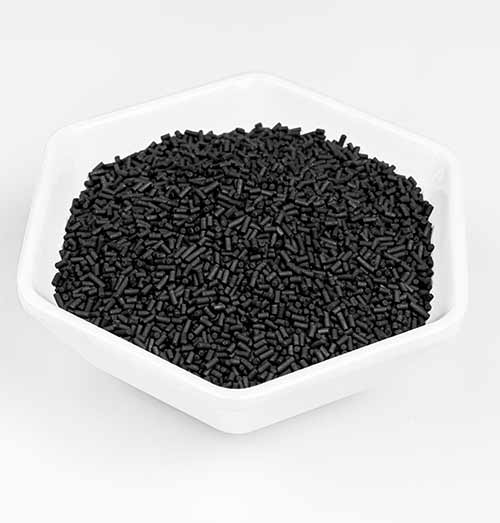
Carbon Molecular Sieve (CMS) is a professional porous carbon adsorption material and the core consumable of PSA pressure swing adsorption nitrogen generators. Manufactured through high-temperature carbonization, precision activation and pore size adjustment processes, CMS is equipped with abundant uniformly distributed nano-scale micropores. We precisely control the micropore size within 0.28~0.30nm, which is exactly between the kinetic diameters of oxygen and nitrogen molecules. This accurate pore structure lays the fundamental foundation for air oxygen-nitrogen separation.
2. Core Principle of Kinetic Adsorption Separation
CMS-based nitrogen production realizes gas separation relying on differences in molecular diffusion rate, rather than static physical pore blocking, which is a common misconception in the air separation industry. After being compressed by an air compressor and purified by pre-treatment systems to remove moisture, oil and dust, clean dry compressed air is delivered into adsorption towers filled with carbon molecular sieves. Oxygen and nitrogen molecules present completely different diffusion behaviors inside CMS bed:
The whole gas separation process depends on the time difference of molecular diffusion, instead of static equilibrium adsorption, so it is defined as kinetic separation, which is the core working logic of PSA nitrogen generation technology. When the micropores of CMS are saturated with adsorbed oxygen, the system will automatically release pressure. The trapped oxygen will be desorbed and discharged out of the towers rapidly. The carbon molecular sieve achieves self-regeneration without heating or chemical agents, enabling long-term cyclic and reusable performance.
3. Complete Process Flow of PSA Pressure Swing Adsorption Nitrogen Generation
Carbon molecular sieve cannot work independently. It needs to match a dual-tower PSA system to realize continuous nitrogen supply through alternating pressurized adsorption and decompression desorption. The complete nitrogen generation process is divided into four key procedures:
3.1 Air Pre-treatment System (Pre-purification)
The air compressor compresses atmospheric air to 0.6-0.8MPa. Then the compressed air passes through refrigerated dryers and three-stage precision filters to completely eliminate dust, liquid water and oil contamination. Moisture and oil are the top threats to carbon molecular sieves, which will cause irreversible micropore blockage, damage adsorption performance permanently and shorten the service life of CMS dramatically. Therefore, a complete pre-filter system is indispensable for standard PSA nitrogen generators.
3.2 Pressurized Adsorption (Core Nitrogen Production Stage)
Purified dry compressed air flows into the CMS-filled adsorption tower. Under high pressure, oxygen molecules are quickly adsorbed into micropores, while nitrogen molecules pass through the tower directly. High-purity nitrogen with a purity ranging from 95% to 99.999% can be produced within dozens of seconds.
3.3 Pressure Equalization (Energy-saving & Protection Process)
After one adsorption tower reaches oxygen adsorption saturation, the system switches automatically and balances pressure between dual towers. Residual pressure inside the tower is recycled to reduce energy consumption for subsequent pressurization. Meanwhile, this process avoids sharp pressure fluctuation to prevent CMS particle pulverization, effectively extending the service life of carbon molecular sieves.
3.4 Decompression Desorption (Molecular Sieve Regeneration)
The saturated adsorption tower is depressurized to atmospheric pressure rapidly. Oxygen and other impurity gases trapped in micropores are fully desorbed and exhausted. The micropores of CMS return to vacant state to finish automatic regeneration. No extra heating device or consumable replacement is required during the whole regeneration process.
4. Performance Comparison: PSA CMS Nitrogen Generation vs Other Nitrogen Production Technologies
|
Nitrogen Generation Method |
Start-up Time |
Operating Cost |
Applicable Scenarios |
Max Nitrogen Purity |
|
PSA CMS Nitrogen Generation |
3-5 minutes for qualified nitrogen output |
Low, no frequent consumable replacement |
Most medium and small industrial sites |
99.999% |
|
Cryogenic Air Separation |
More than 8 hours pre-cooling time |
Extremely high, high equipment investment & power consumption |
Large-scale centralized high-flow nitrogen supply |
99.9995% |
|
Membrane Separation Nitrogen Generation |
Instant gas output |
Medium, membrane modules prone to aging |
Large-flow demand with low nitrogen purity requirement |
99.5% |
Considering overall cost performance, flexible start-stop performance and maintenance difficulty, PSA CMS nitrogen generation has become the preferred solution for over 90% of medium and small industrial nitrogen supply projects worldwide.
5. Influence of CMS Quality on Nitrogen Generator Performance
More than 70% of the overall performance of PSA nitrogen generators depends on the quality of carbon molecular sieves. There is a huge performance gap between low-end inferior CMS and industrial high-precision CMS:
6. Our Product Portfolio: One-stop Supply of Full-range Air Separation Adsorbents
With more than 10 years of professional experience in air separation adsorption material industry, our company focuses on the R&D, production and sales of molecular sieves and supporting air separation consumables. Our main product lines cover:
We support sample trial orders, bulk stock wholesale and customized pore size production. Free technical services including molecular sieve selection guidance and nitrogen generator commissioning support are available. We help nitrogen equipment manufacturers and end industrial users improve gas production efficiency and reduce overall gas supply costs.
7. Frequently Asked Questions
Lütfen okumaya devam edin, haberdar olun, abone olun ve düşüncelerinizi bizimle paylaşmanızı bekliyoruz.

telif hakkı
@ 2026 Chizhou Shanli Moleküler Elek Co., Ltd. Her hakkı saklıdır.
 AĞ DESTEKLENİYOR
Hi! Click one of our members below to chat on